Fly Fishing the Middle Fork as a Beginner: What to Expect
Most people who ask us about learning to fly fish here are asking a different question underneath. They want to know whether they'll spend six days feeling like the person who doesn't know what they're doing.
Fly fishing the Middle Fork as a beginner is a better idea than it sounds, and the reason has nothing to do with your casting. It has to do with the fish.
Why this is an unusually forgiving place to learn
The Middle Fork of the Salmon River is a dry fly fishery for native Westslope Cutthroat Trout. The water is clear, it's free-flowing, and it sees very little fishing pressure compared to anything you can drive to.
What that adds up to for a new angler is fish that haven't been educated. Cutthroat here are willing. They'll come up for a dry fly that a picky trout on a hard-fished river would ignore, and they'll forgive a drift that isn't perfect.
That matters more than any amount of instruction. Learning to fly fish where fish rarely eat is discouraging. Learning where they do is the opposite, and confidence is most of the game early on.
The honest version of what to expect
Now the part nobody puts in the brochure. You'll see a figure quoted about this river, including on our own fly fishing trips page: on a prime day, an angler can land over 100 trout averaging 12 to 15 inches.
Read that carefully. It says experienced angler, and it says prime day. Both qualifiers are doing real work.
A beginner will catch fish here. A beginner will not catch 100 fish, and shouldn't measure the trip against that number. What a good first day looks like is a handful of fish, a couple of clean drifts you'll remember, and the moment where you finally feel the timing of the cast instead of thinking about it.
Fishing quality also moves with water and season. Our fishing season runs from about mid-July through mid-October, when the river has dropped and warmed and cleared. Nobody, including us, can promise you a prime day.
Casting from a boat is its own skill
If you've practiced on a lawn or a pond, be ready for this to feel different. On a float trip you're moving. The good water arrives, you get a drift or two, and then it's behind you.
Nobody is good at that on the first morning. It's a rhythm, and it comes on the first day or the second.
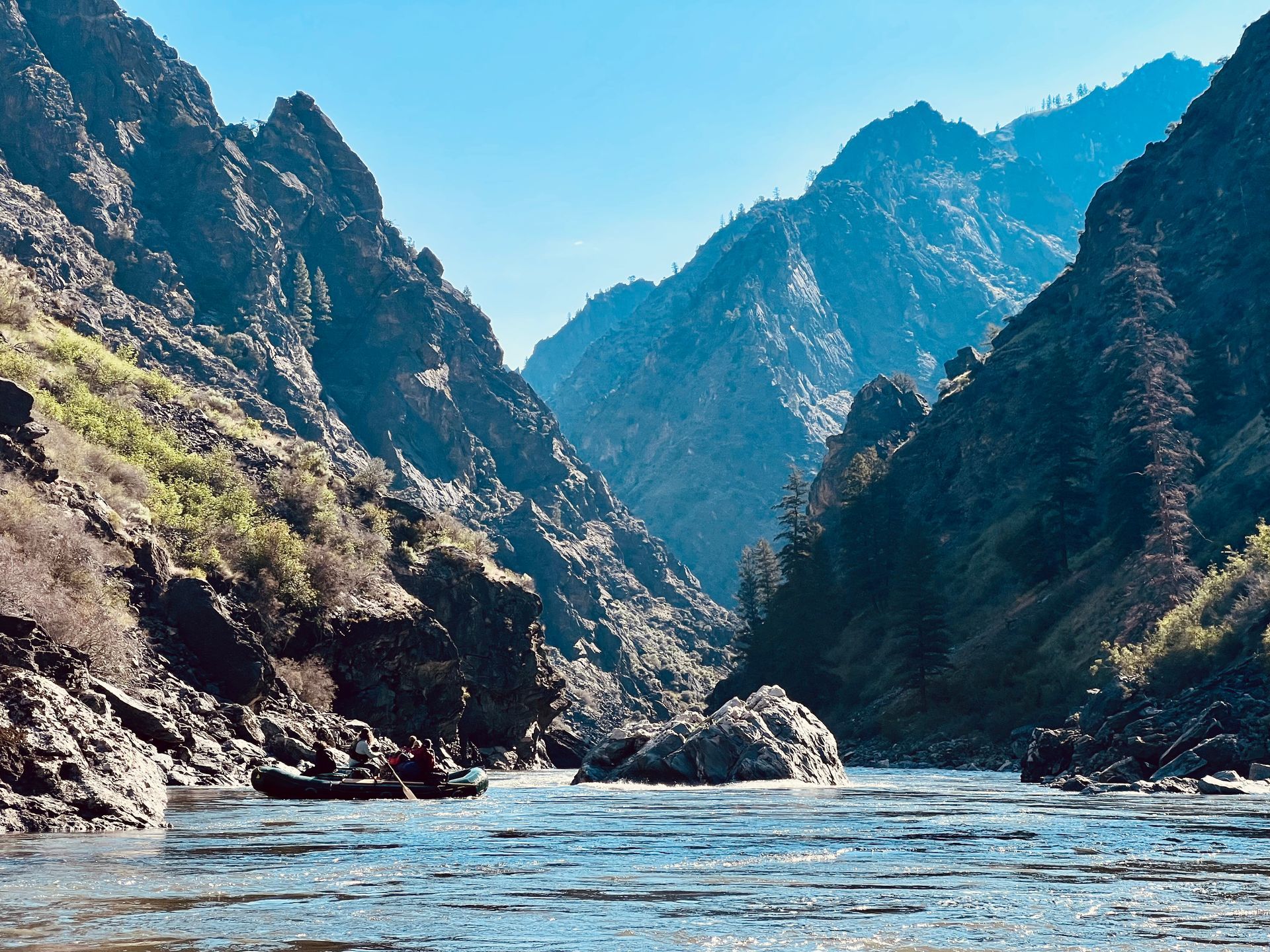
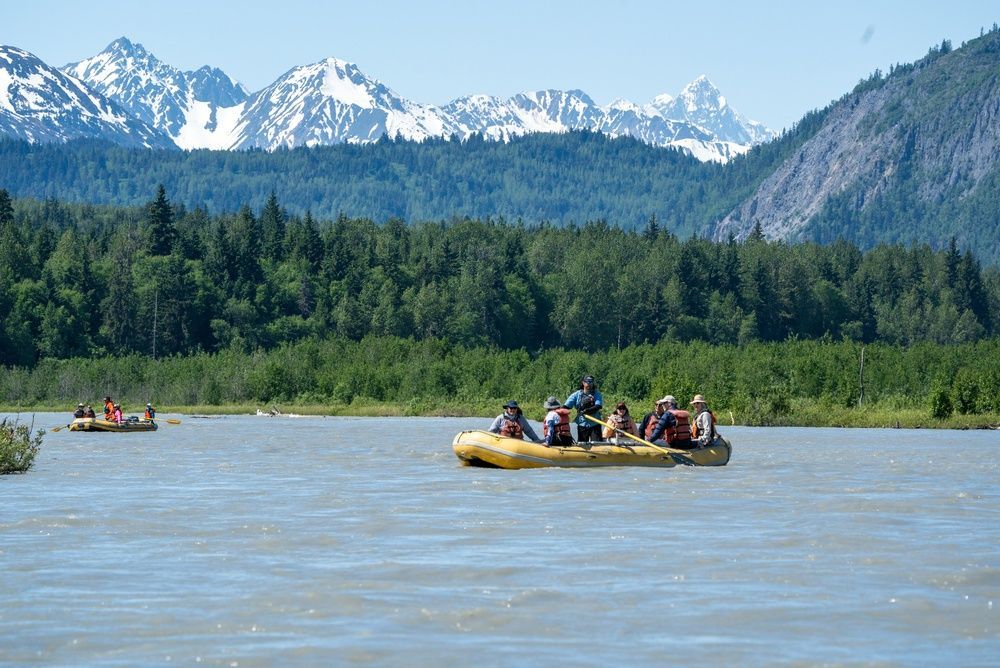
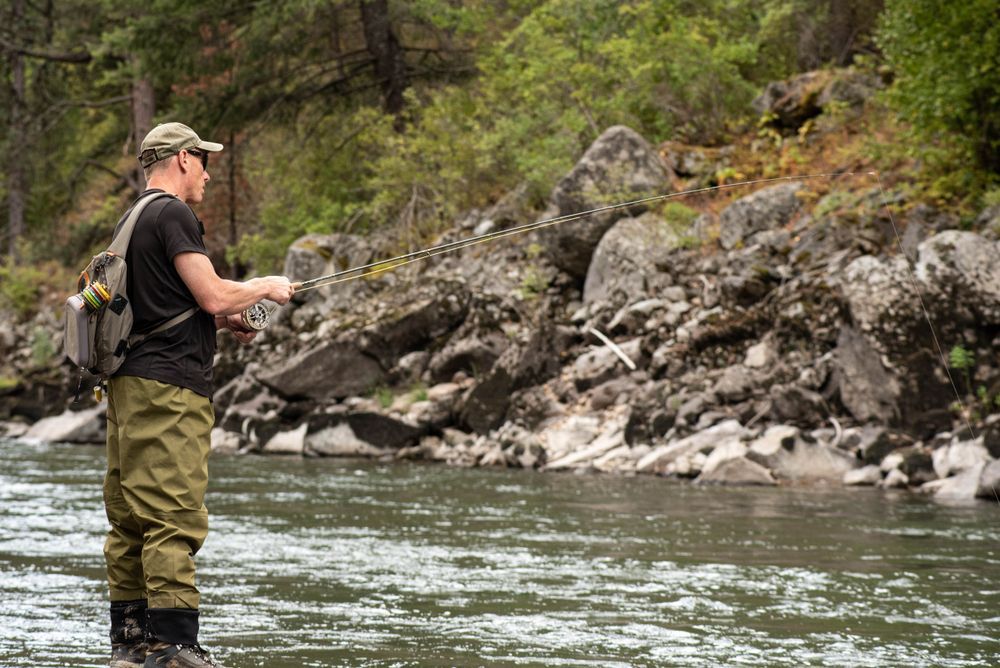
The rigging helps more than you'd think. Our fishing rafts carry two anglers, one in the front and one in the back, with a guide rowing between them. The guide's whole job is to put you where the fish are and hold you there. While the gear boats run ahead to set camp, the fishing boats work the water worth working. You'll also get out and fish on foot in places, and a good guide will read which of those suits you on a given day. Ask us about the balance when you call.
How to get the most instruction
This is the practical decision that actually affects your week. There are a few ways to fish with us, and they deliver very different amounts of a guide's attention.
- Fishing from an oar boat on a standard rafting trip. You can fish during the day while the trip covers river miles. You'll catch fish and pick things up, but the boat isn't dedicated to fishing and neither is the day.
- Adding a private fishing boat to a standard trip. A boat rigged for angling with an expert on the sticks, on the same trip and in the same camps as everyone else. For a beginner this is the version that turns a week of fishing into a week of learning to fish. It's the one I'd point a new angler toward.
- A fishing-specific trip. Small groups of 16 to 18 in August, with the whole trip built around the water. Excellent, and worth asking us directly whether it suits a true beginner or whether you'd get more out of a private boat first.
Pricing for the fishing boat options lives on dates and rates. Ask early either way, since there are only so many fishing boats.
Gear, licenses, and the boring necessary parts
Our fishing guides carry the flies that are working and they'll tell you what to tie on, which removes the single most paralyzing decision for a new angler.
What you should bring versus what we'll have is a conversation to have before you pack, so call us. If you want to top up on the way in, there are good shops en route: Snake River Fly in Pocatello, The Bent Rod Outdoors in Challis, and the Salmon River Fly Box in Salmon. Anyone at those counters will set a beginner up sensibly if you tell them where you're going.
For licenses, seasons, and current rules, go to Idaho Fish and Game. Those are theirs to set and they change, so we won't summarize them here. How we handle and release fish on our boats, your guide will walk you through on the water.
The rest of what to pack is on our equipment and packing page, and it's worth reading, because the gear boat runs ahead each morning and your big bag won't be available until camp.
What this trip asks of you, fishing aside
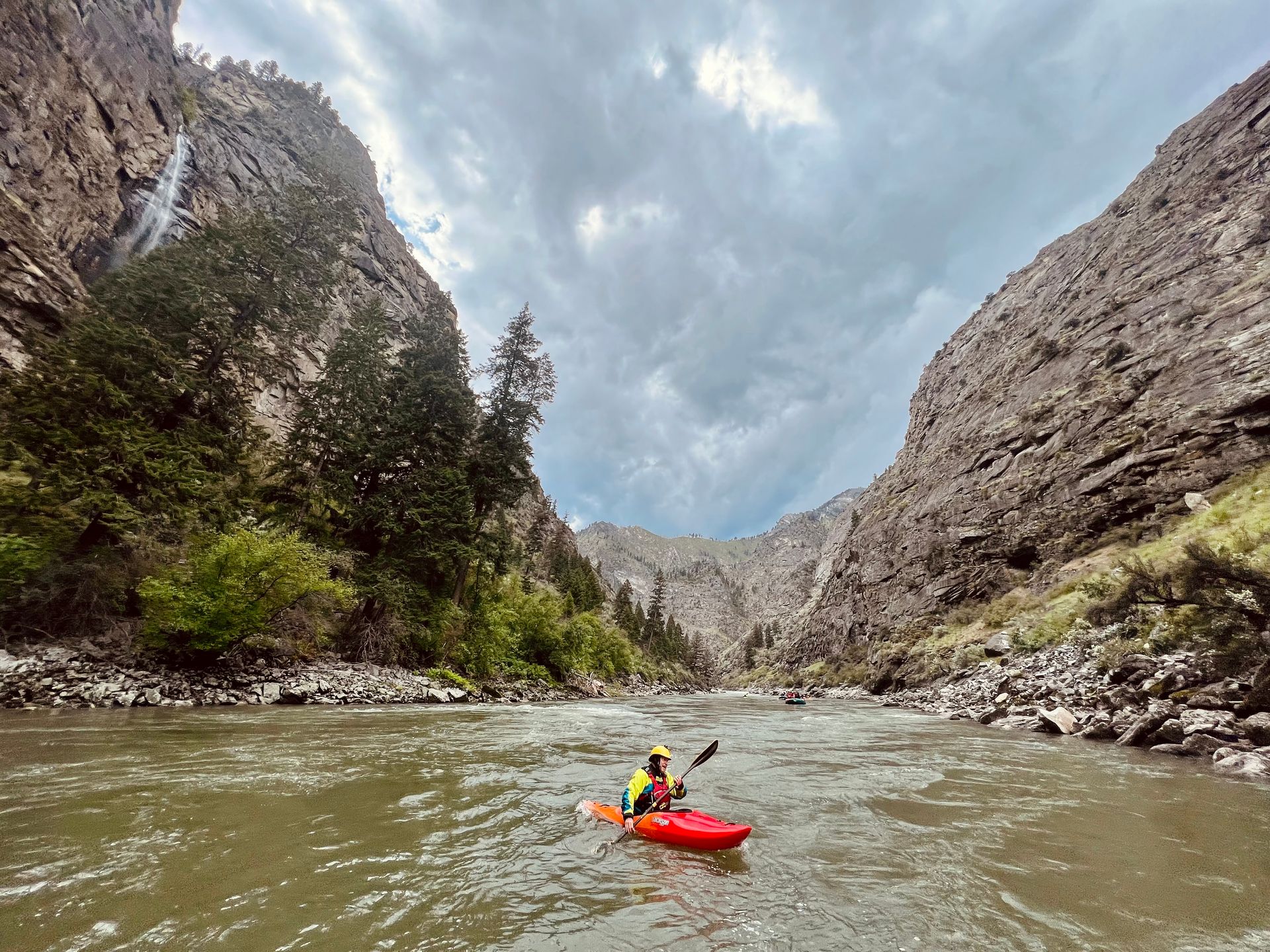
One thing to be clear about: this is a wilderness river trip that happens to have very good fishing. It is not a lodge with a boat ramp.
- You'll sleep on the ground in a tent, in a new camp every night, with no shower in the way you mean it.
- The water is cold, in midsummer too, and everyone gets wet.
- It rains, and mountain weather turns fast. Rain gear is not optional.
- You'll be getting in and out of boats on uneven, wet riverbank several times a day.
- There's no cell service and no road access along most of the canyon.
- Whitewater in remote wilderness carries real risk. Our guides are trained in CPR and First Aid and certified in Swift Water Rescue, and they'll brief you before we launch.
If you have a health question or anything about your own situation to weigh, call us and talk with your doctor. We'd rather have that conversation early.
Come learn on good water
The thing about starting here is that it ruins you a little for everywhere else, which is a complaint we're happy to accept. For more on the character of this fishery, why fly fishing belongs on a Middle Fork trip and our Middle Fork fly fishing page are both worth a read.
When you're ready, check dates and rates for open trips, then call us at (208) 221-7935 or email mfwo@idahorapids.com. Tell us how much you've fished, honestly, and we'll tell you which version of this trip will teach you the most.