No Cell Service for Six Days: Getting Ready to Be Off the Grid on the Middle Fork
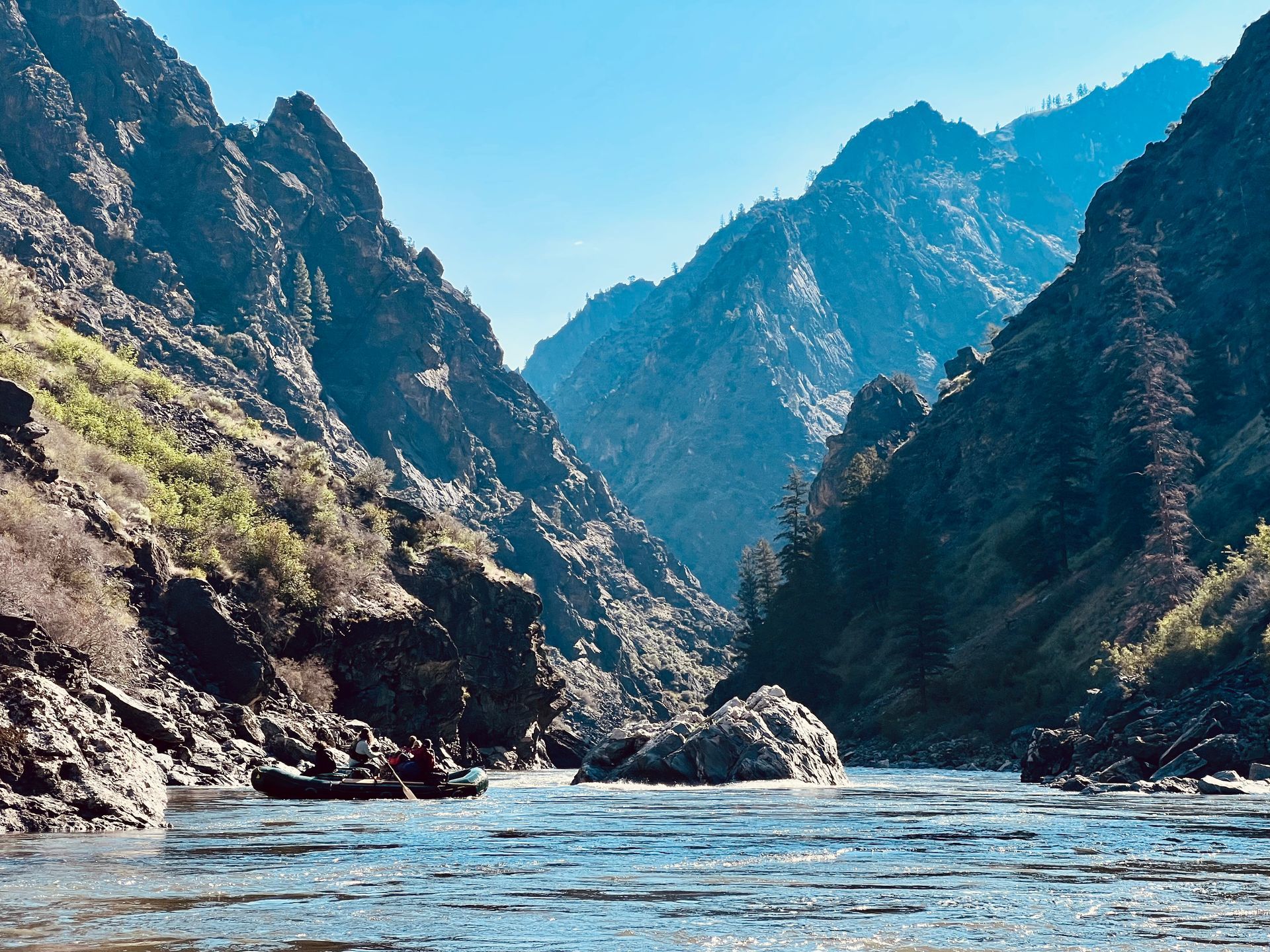
There is no cell service on the Middle Fork. Not patchy service, not a bar if you stand on the right rock. None, for the length of your trip, whether that's five days or six.
Most guests tell us afterward that this turned out to be the best part. But the days leading up to a launch are a different story, and "what do I do about work" is one of the most common questions we get from people who are already booked. So let's handle it properly.
What "no cell service on the Middle Fork" actually means for you
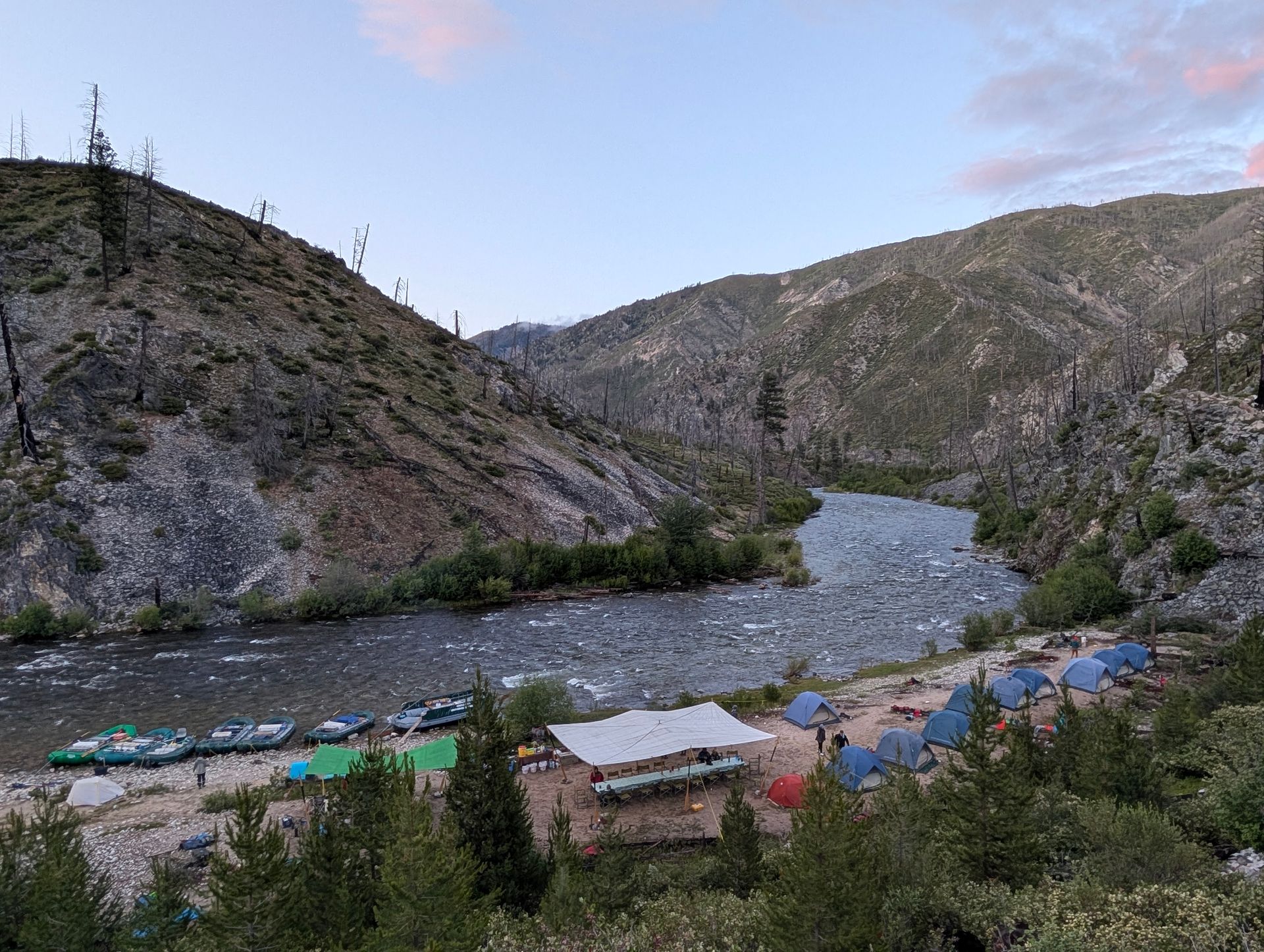
Once you launch, you are in a wilderness canyon with no road access along most of the corridor. Your phone becomes a camera and a clock. Our packing list says it plainly: bring a camera or phone for photos only.
That means no email, no messages, no maps, no music through your own headphones, no checking anything. It also means nobody can reach you, and that's the part that takes the most preparation. Not because it's difficult, but because it takes a few phone calls you'd rather make now than at 11 p.m. the night before orientation.
Get work off your plate a day earlier than feels necessary
The classic mistake is planning to wrap up loose ends on your travel day. Travel days go sideways. Assume yours will.
- Set your out-of-office to cover a buffer day on each end. Flights get delayed, and take-out timing depends on the river.
- Say clearly in it that you will be unreachable, not "checking email occasionally." Occasionally is not an option here.
- Name a real person as the decision-maker in your absence, and tell that person they have actual authority.
- Do the handoff conversation out loud, not over Slack. Ten minutes of talking prevents a week of guessing.
Set up the people at home
Whoever is staying behind needs three things: your launch and take-out dates, the understanding that they will not hear from you in between, and a number to call if something happens on their end.
Ask us before your trip how you'd like emergency contact handled, and give your person that information in writing. Don't leave it as a vague "the outfitter will know." Put it on the fridge.
Then handle the ordinary stuff: pets, plants, the kid's ride to practice, the package that's arriving Thursday. If you have medications, our packing list covers them, and you'll want enough for the full trip plus your travel days. If there's anything about your situation we should know, call us and tell us before you arrive rather than mentioning it at the boat ramp.
You'll find the rest of the list on our equipment and packing page, and if you're still assembling gear, pack without overpacking covers what people consistently bring too much of.
Decide now how you want to use a camera
Some guests bring a real camera and love having it. Others put the phone in the dry bag on day one and don't take it out until the drive home. Both are fine. Deciding in advance is what keeps you from spending the week half-documenting and half-experiencing.
A few practical notes if you're bringing something you care about:
- Keep it in your small day dry bag, not your big duffel. The gear boat goes ahead each morning and your large bag won't be available until camp.
- Assume everything will get wet at some point, because it will.
- Ask us about charging before you go rather than assuming you'll find an outlet.
- Airplane mode from launch to take-out. It's a camera now.
Bring something for the quiet hours
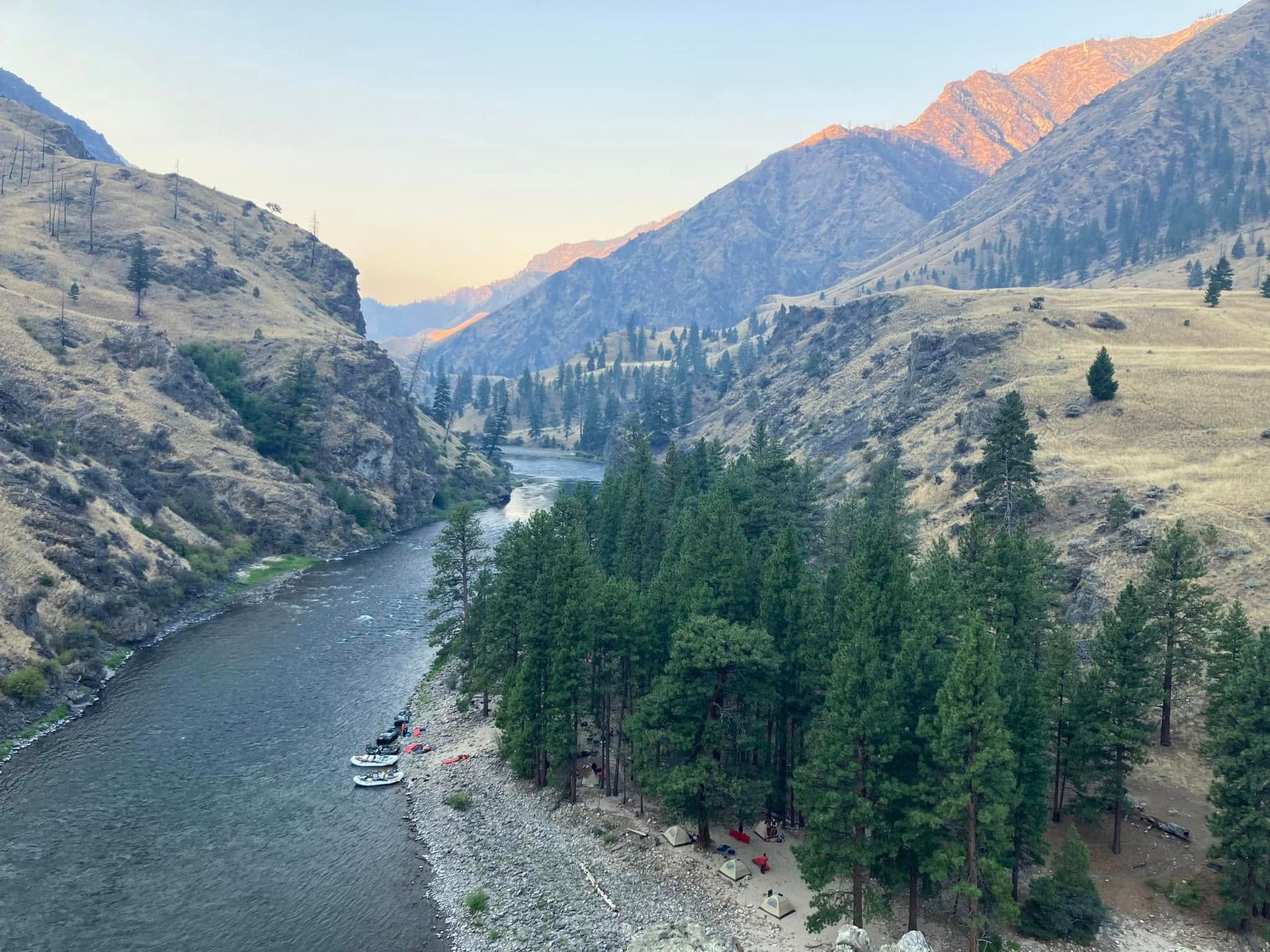
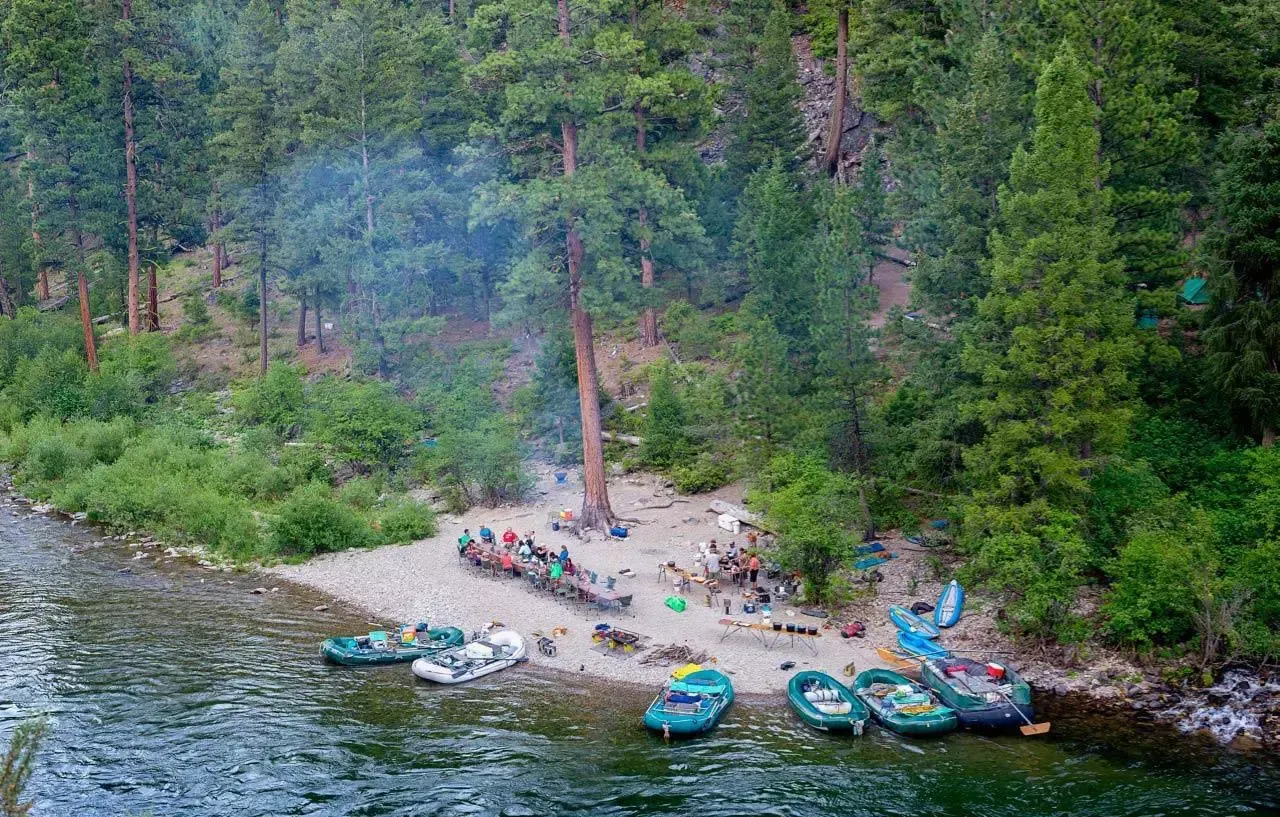
Camp is not a schedule. You arrive in the afternoon, appetizers show up, dinner gets made, and then there's a long stretch of evening with nothing you have to do. If your usual answer to unstructured time is a screen, bring a different answer.
Our packing list suggests a good book or a musical instrument, and the instrument is not a joke. Some of our guides play. The what a day on the river looks like page gives you the shape of it: early coffee if you want it, breakfast around eight, on the water by ten, camp by late afternoon.
What this trip asks of you
Being off the grid is easier than the rest of it, honestly. Here's the plain version of what you're signing up for.
- You'll sleep on the ground in a tent, on a pad and cot, in a new camp every night.
- There's no shower in the way you mean it. Solar showers are available if you ask.
- You'll be in the sun for hours, and then you'll be cold and wet, sometimes in the same afternoon. Mountain weather changes fast and it rains.
- The water is cold. That doesn't stop being true in midsummer.
- You'll be getting in and out of boats and walking on uneven riverbank footing several times a day.
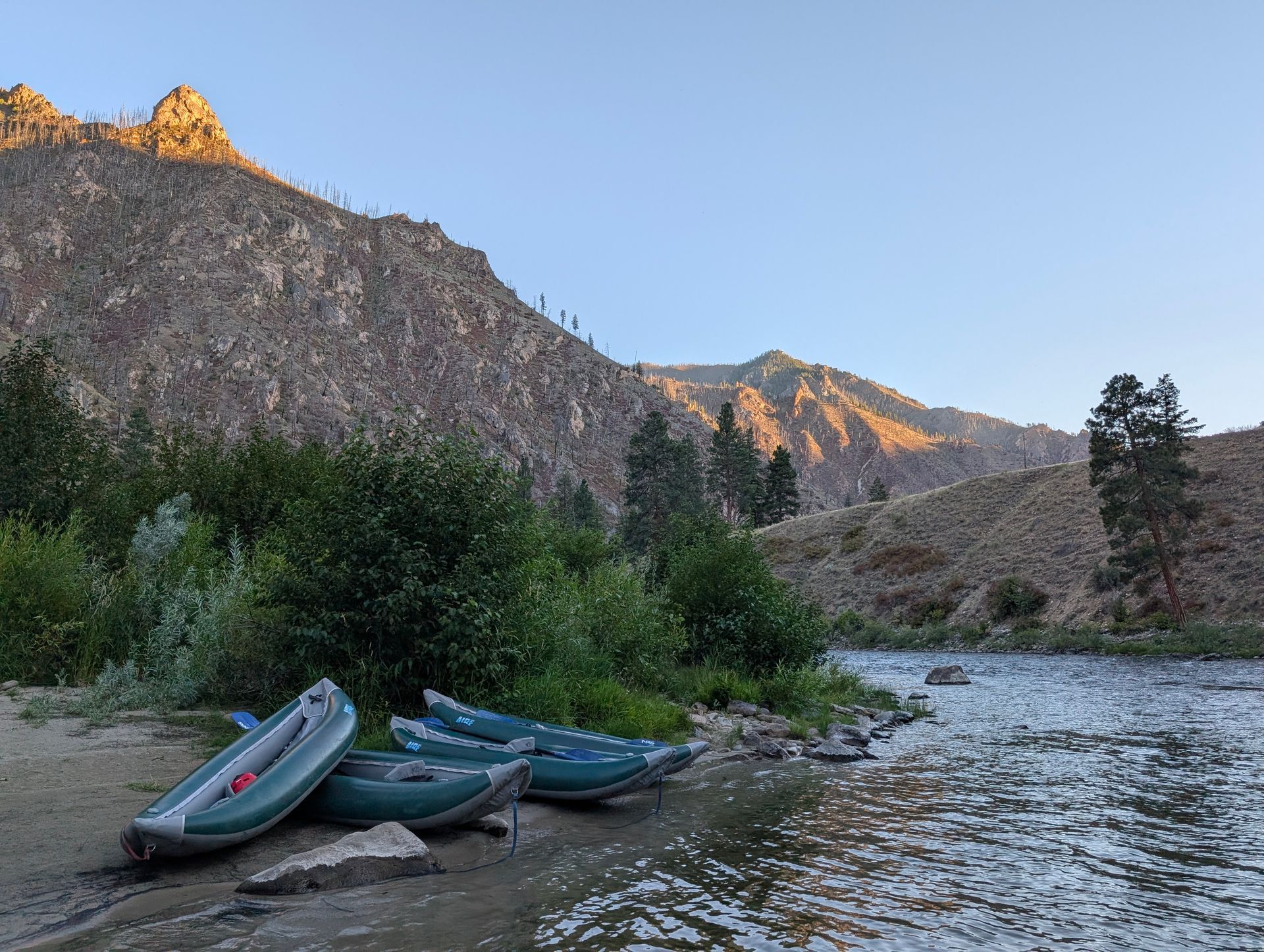
- Once you launch, there's no road out along most of the corridor.
None of that is a warning. It's the trip. But if you have a health situation, a mobility question, or a dietary need, call us and talk it through, and talk with your own doctor about your health. We'd much rather have that conversation in June than at the ramp. Our frequently asked questions page covers a lot of the common ones.
The last thing
Do the work handoff. Make the phone calls. Print the dates for your person at home. Then let it go, because there is nothing you can do about any of it once the boats are in the water, and that turns out to be the point.
If you haven't booked yet and this is the part that sounds appealing rather than alarming, take a look at dates and rates. And if you're already on a trip this season, call us at (208) 221-7935 with anything on your mind. That's what we're here for.